Synthesizers
Overview
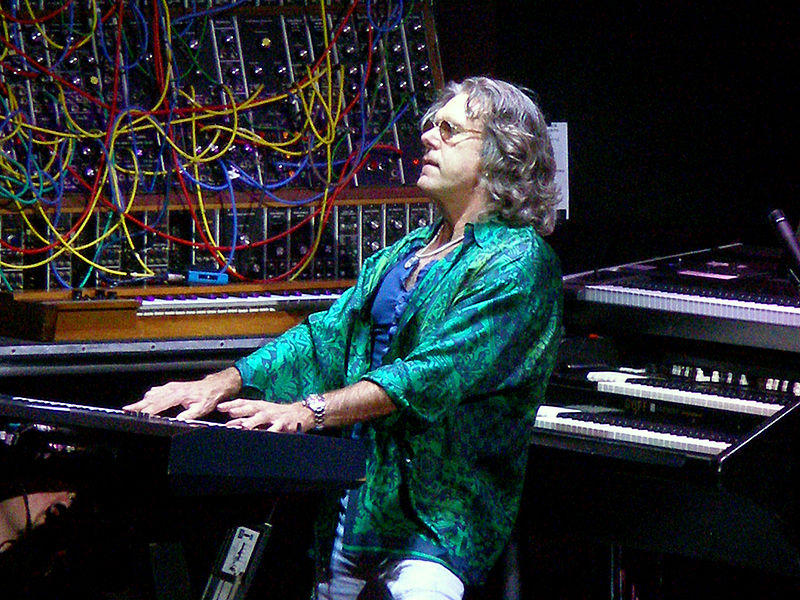 Synthesizers are one of the most engaging parts of any DSP library, as they involve the actual creation of sounds. What makes synthesizers so engaging is the level of control they offer over sound creation. A synthesizer allows a user to shape and mold a sound by adjusting parameters such as waveform shape, frequency, amplitude, and filter settings. This level of control enables users to create expressive and unique sounds that can be used in a variety of contexts, ranging from music production to sound design for film and video games.
The advancements in DSP technology have made synthesizers even more powerful and flexible. Users can now create sounds that were previously impossible to achieve with traditional analog synthesizers. The Q DSP library provides some common synthesizers such as sine-wave, square, pulse, triangle and saw-tooth, as well as various generators for sculpting the sound envelopes with controls for attack, decay, hold, sustain and release. These are designed as modular building blocks that are combined to form more complex synthesizers.
Oscillator
Oscillator is a concept representation of an oscillator that generates periodic waveforms.
Oscillators are function objects that take in a phase_iterator: an iterator over the phase. The output is typically a floating point value.
Declaration
namespace cycfi::q::concepts
{
   template <typename T>
   concept Oscillator =
      std::copy_constructible<T> &&
      std::assignable_from<T&, T> &&
      std::default_initializable<T> &&
      requires(T o, T a, T b, phase_iterator pi)
   {
      o(pi);            // Generate a periodic waveform given `{phase_iterator}`, `pi`.
   };
}
Expressions
Constructors and Assignment
| Expression | Semantics |
|---|---|
|
Default construct an |
|
Copy construct from |
|
Assign |
| C++ brace initialization may also be used. |
Function Call
| Expression | Semantics | Return Type |
|---|---|---|
|
Generate a periodic waveform given |
|
Example
Fill the buffer out with the waveform of any oscillator, starting from the
phase iterator pi:
namespace q = cycfi::q;

template <q::concepts::Oscillator Osc, typename Buffer>   (1)
void generate(Osc osc, q::phase_iterator pi, Buffer& out)
{
   for (auto& s : out)
      s = osc(pi++);                                       (2)
}| 1 | Constrain Osc to types that conform to Oscillator. |
| 2 | Generate the sample at the current phase, then advance the phase. |
BasicOscillator
BasicOscillator is a refinement of the Oscillator concept. BasicOscillator is not bandwidth limited. This is suitable in certain cases. Moreover, some oscillators are inherently bandwidth limited.
Declaration
namespace cycfi::q::concepts
{
   template <typename T>
   concept BasicOscillator =
      Oscillator<T> &&
      requires(T o, phase ph)
   {
      o(ph);            // Generate a periodic waveform given `{phase}`, `ph`.
   };
}
Expressions
In addition to valid expressions for Oscillator, BasicOscillator allows these expressions.
Function Call
| Expression | Semantics | Return Type |
|---|---|---|
|
Generate a periodic waveform given |
|
Example
Make a single-cycle wavetable of 256 samples from any basic oscillator:
namespace q = cycfi::q;

template <q::concepts::BasicOscillator Osc>                     (1)
std::array<float, 256> make_table(Osc osc)
{
   auto table = std::array<float, 256>{};
   for (std::size_t i = 0; i != table.size(); ++i)
      table[i] = osc(q::frac_to_phase(double(i) / table.size()));  (2)
   return table;
}| 1 | Constrain Osc to types that conform to BasicOscillator. |
| 2 | Generate the waveform at the phase i / 256 of a cycle. |
BandwidthLimitedOscillator
Waveforms with hard discontinuities such as sawtooth and square waves can generate harmonics that extend beyond the Nyquist frequency range or half the sampling rate. Oscillators may be bandwidth limited to ensure that the harmonics generated fall within the Nyquist frequency range to prevent aliasing, which causes unwanted spectral artifacts in the signal.
BandwidthLimitedOscillator is a refinement of the Oscillator concept. These oscillators are bandwidth limited.
Declaration
namespace cycfi::q::concepts
{
   template <typename T>
   concept BandwidthLimitedOscillator =
      Oscillator<T> &&
      requires(T o, phase ph, phase dt)
   {
      o(ph, dt);        // Generate a periodic waveform given `{phase}`, `ph`
                        // and another `{phase}`, `dt` representing the delta
                        // phase between two samples of the waveform (this is
                        // equivalent to the `_step` member function of the
                        // `{phase_iterator}`).
   };
}
Expressions
In addition to valid expressions for Oscillator, BandwidthLimitedOscillator allows these expressions.
Notation
o-
Instance of a type that conforms to
BandwidthLimitedOscillator. ph,dt-
Objects of type
phase.
Function Call
| Expression | Semantics | Return Type |
|---|---|---|
|
Generate a periodic waveform given |
|
Example
Fill the buffer out with the waveform of any bandwidth limited oscillator,
starting at the phase ph and advancing by the phase step dt per sample:
namespace q = cycfi::q;

template <q::concepts::BandwidthLimitedOscillator Osc, typename Buffer>  (1)
void generate(Osc osc, q::phase ph, q::phase dt, Buffer& out)
{
   for (auto& s : out)
   {
      s = osc(ph, dt);                                                    (2)
      ph += dt;
   }
}| 1 | Constrain Osc to types that conform to BandwidthLimitedOscillator. |
| 2 | Generate the sample at ph, given the phase step dt between samples. |
Generator
Generator is a concept representation of a generator. Generators are function objects that take no function arguments and return an output that is typically a floating point value. Generators are typically non-periodic. Generators are useful for constructing complex signals, envelopes and tapers (also known as window functions).
Declaration
namespace cycfi::q::concepts
{
   template <typename T>
   concept Generator =
      std::copy_constructible<T> &&
      std::assignable_from<T&, T> &&
      requires(T g, T a, T b)
      {
         g();              // Generate a signal.
      };
}
Expressions
Constructors and Assignment
| Expression | Semantics |
|---|---|
|
Copy construct from |
|
Assign |
| C++ brace initialization may also be used. |
Example
Fill the buffer out with the output of any generator:
namespace q = cycfi::q;

template <q::concepts::Generator Gen, typename Buffer>   (1)
void generate(Gen& gen, Buffer& out)
{
   for (auto& s : out)
      s = gen();                                          (2)
}| 1 | Constrain Gen to types that conform to Generator. |
| 2 | Generate the next sample. |
EnvelopeGenerator
EnvelopeGenerator is a concept representation of an envelope generator: a Generator with an attack, a release, and the state of its phase. An FM Operator takes any type that conforms to EnvelopeGenerator: the DX Envelope Generator, the adsr_envelope_gen, or a type of your own.
The configuration type, T::config, holds the envelope’s parameters. It is given at construction, or with set while the envelope runs. set keeps the current level, so a sounding note continues from where it is, with the new parameters. gain is a master volume that multiplies the output. Apply amplitude modulation through gain.
Declaration
namespace cycfi::q::concepts
{
   template <typename T>
   concept EnvelopeGenerator =
      Generator<T> &&
      requires(T e, typename T::config const& cfg, float sps, float g)
      {
         T(cfg, sps);      // Construct from a config at a sample rate.
         e.set(cfg, sps);  // Set a new config, keeping the current level.
         e.attack();       // Start the attack phase.
         e.release();      // Start the release phase.
         e.reset();        // Reset to the idle phase.
         { e.in_idle_phase() } -> std::convertible_to<bool>;
         { e.in_release_phase() } -> std::convertible_to<bool>;
         e.gain(g);        // Set the master volume.
         { e.gain() } -> std::convertible_to<float>;
      };
}
Expressions
In addition to valid expressions for Generator, EnvelopeGenerator allows these expressions.
Notation
T-
A type that conforms to
EnvelopeGenerator. e-
Instance of
T. cfg-
Object of type
T::config. sps-
Floating point value representing samples per second.
g-
Floating point value for a linear gain.
Constructors
| Expression | Semantics |
|---|---|
|
Construct a |
Operation
| Expression | Semantics | Return Type |
|---|---|---|
|
Start the attack phase, from the current level. |
|
|
Start the release phase, from the current level. |
|
|
Reset and move to the idle phase. |
|
Mutators
| Expression | Semantics | Return Type |
|---|---|---|
|
Set the configuration given |
|
|
Set the master volume on the output. |
|
Accessors
| Expression | Semantics | Return Type |
|---|---|---|
|
Get the master volume. |
Convertible to |
|
Return |
Convertible to |
|
Return |
Convertible to |
Example
A voice that applies any envelope generator to its input samples:
namespace q = cycfi::q;

template <q::concepts::EnvelopeGenerator Env>       (1)
struct voice
{
   voice(typename Env::config const& cfg, float sps)
    : env{cfg, sps}                                  (2)
   {}

   void  note_on()               { env.attack(); }   (3)
   void  note_off()              { env.release(); }  (4)
   bool  active() const          { return !env.in_idle_phase(); }
   float operator()(float s)     { return s * env(); }

   Env env;
};| 1 | Constrain Env to types that conform to EnvelopeGenerator. |
| 2 | Construct the envelope generator from its configuration. |
| 3 | Start the attack phase when a note starts. |
| 4 | Start the release phase when the note ends. The voice is active until the envelope returns to the idle phase. |
ADSRConfig
ADSRConfig is a concept representation of the parameters of an ADSR envelope: the attack, decay and release durations, and the sustain level. The adsr_envelope_gen is constructed from, and set with, any type that conforms to ADSRConfig. adsr_envelope_gen::config is one such type.
Declaration
namespace cycfi::q::concepts
{
   template <typename T>
   concept ADSRConfig =
      requires(T const& cfg)
      {
         { cfg.attack_rate } -> std::convertible_to<duration>;    // Attack duration.
         { cfg.decay_rate } -> std::convertible_to<duration>;     // Decay duration.
         { cfg.sustain_level } -> std::convertible_to<decibel>;   // Sustain level.
         { cfg.release_rate } -> std::convertible_to<duration>;   // Release duration.
      };
}
Expressions
Access
| Expression | Semantics | Return Type |
|---|---|---|
|
Get the attack duration. |
Convertible to |
|
Get the decay duration. |
Convertible to |
|
Get the sustain level. |
Convertible to |
|
Get the release duration. |
Convertible to |
A type that conforms to ADSRConfig may also have a sustain_rate
member, convertible to duration. With it, the sustain of an
adsr_envelope_gen runs down to 0.0 over that duration. Without it, the
sustain holds its level until the release.
|
Example
Make an ADSR configuration with a held sustain, and construct an
adsr_envelope_gen from it, at sps samples per second:
#include <q/synth/gen/envelope_gen.hpp>  // For adsr_envelope_gen

namespace q = cycfi::q;
using namespace q::literals;

struct pad_config                                 (1)
{
   q::duration    attack_rate    = 200_ms;
   q::duration    decay_rate     = 500_ms;
   q::decibel     sustain_level  = -6_dB;
   q::duration    release_rate   = 1_s;
};

auto env = q::adsr_envelope_gen{pad_config{}, sps}; (2)| 1 | Define a type that conforms to ADSRConfig, with no sustain_rate. |
| 2 | Construct an ADSR envelope generator whose sustain holds at -6 dB until the release. |
Ramp
Ramp is a concept representation of a generator that generates non-periodic signals from 0.0 to 1.0 or from 1.0 to 0.0. It is a refinement of the Generator concept. Ramps are suitable for generating envelopes. A Ramp represents a segment of an envelope. Essentially, an envelope comprises two or more upward and downward `Ramp`s.
Declaration
namespace cycfi::q::concepts
{
   template <typename T>
   concept Ramp =
      Generator<T> &&
      requires(T v, duration w, float sps)
   {
      T(w, sps);        // Construct a Ramp given duration, w, and sps.
      v.reset();        // Reset the Ramp to the start.
      v.config(w, sps); // Configure a Ramp given duration, w, and sps.
   };
}
Expressions
In addition to valid expressions for Generator, Ramp allows these expressions.
Notation
r-
Instance of a type that conforms to
Ramp. w-
Object of type
duration. sps-
Floating point value representing samples per second.
Constructors
| Expression | Semantics |
|---|---|
|
Construct a |
| C++ brace initialization may also be used. |
Mutators
| Expression | Semantics | Return Type |
|---|---|---|
|
Configure a |
|
Example
Shape the start of the buffer out with any ramp, over the duration w, at
sps samples per second:
namespace q = cycfi::q;

template <q::concepts::Ramp R, typename Buffer>       (1)
void shape(Buffer& out, q::duration w, float sps)
{
   auto r = R{w, sps};                                (2)
   auto n = std::size_t(q::as_float(w) * sps);
   for (std::size_t i = 0; i != n && i != out.size(); ++i)
      out[i] *= r();                                  (3)
}| 1 | Constrain R to types that conform to Ramp. |
| 2 | Construct the ramp, w wide. |
| 3 | Generate the next value of the ramp and apply it to the sample. |